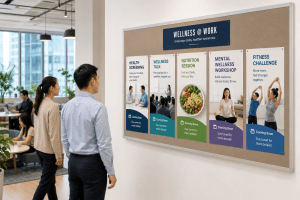
Onsite Talks (OT) remain one of the most effective, low-barrier ways for HR teams to drive wellness engagement in the workplace. In a time where attention spans are shorter, hybrid work is entrenched, and online fatigue is real, employees prefer learning that is short, in-person, and socially energising.
OT has now become a strategic tool for HR not only to promote wellness — but also to rebuild office culture, increase physical presence, and create bonding moments that cannot be replicated online. When designed well, onsite talks deliver high participation, shared learning, and meaningful behavioural shifts. Most importantly, they send a clear message:
“Your company cares about your wellbeing — and your sense of belonging.”
This guide outlines how HR teams can plan, promote, and execute onsite talks that deliver real engagement and strong cultural value.
1. Why Onsite Talks Still Matter
Employees today are digitally overloaded. Hybrid work has improved flexibility, but it has weakened team cohesion, spontaneous collaboration, belonging, and shared learning moments. Onsite talks counter this by being:
- in-person (real human interaction)
- social (employees gather in a shared space)
- energising (a break from isolation)
- trust-building (employees see their leaders & colleagues together)
They also serve as a soft, non-intrusive way to:
- Encourage employees to come back onsite
- Create bonding moments
- Strengthen department-level and company-level culture
And uniquely in ESG’s ecosystem, onsite talks are often sponsor-funded, meaning they are: “Free” for HR, low effort to deploy, and high-impact for employees.
2. Choosing the Right Topics (Based on Workforce Signals)
The most successful onsite talks are selected based on real workforce needs — not guesswork. Choose topics based on:
- health screening trends
- workforce demographics
- financial concerns
- mental wellbeing trends
- leadership priorities
- employee feedback
High-impact topics include:
- Burnout prevention
- Emotional regulation
- Nutrition & metabolic health
- Chronic disease prevention
- Financial wellness fundamentals
- Productivity & focus
- Women’s health
3. What Drives High Attendance (The ESG Engagement Framework)
Talk success is driven by strong communication — not content alone. Employees attend when the invitation answers: “Why should I attend this NOW?”
Key drivers:
- Topic relevance
- Strong framing (pain-point based)
- Leadership endorsement
- Simple registration
- Convenient timing
- In-office presence (OT naturally supports return-to-office efforts)
4. Running the Talk Smoothly (HR’s Practical Checklist)
HR should prepare:
- Venue setup
- AV equipment
- Speaker briefing
- Attendance capture
- Walk-in flow
ESG ensures consistency and professionalism across all talks.
5. Post-Talk Follow-Up (Where Real Value Compounds)
After the session, HR should:
- send slides or summary
- reinforce two or three actions
- promote related upcoming activities
- gather feedback
ESG measures:
- Employee Satisfaction
- Attitude Toward Employer Care
These two metrics help HR track cultural impact.
6. Common Mistakes HR Should Avoid
Choosing topics without data
- Late speaker requests
- No attendance target
- Minimal promotion
- No follow-up
- Treating OT as one-off
- Not measuring satisfaction and perception
7. Why Onsite Talks Are the Most Cost-Efficient
Engagement Tool OT are:
- short
- scalable
- social
- sponsor-funded (“free”)
- more energising than online sessions
- ideal for return-to-office culture building
8. The ESG Approach to Onsite Talks
ESG provides:
- curated speakers
- proven topics
- communications support
- onsite execution
- attendance tracking
- post-talk insights
We deliver talks employees attend, remember, and act on.
Plan a High-Impact Onsite Talk Today
Explore Onsite Talks to learn more about our talk topics.
Plan Your Wellness Event with us via our corporate wellness programme.