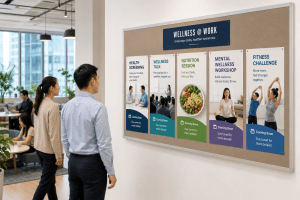
Explore six types of corporate wellness programmes and learn how to choose practical options that fit your employees and workplace.
Corporate wellness can mean almost anything. A health screening before lunch, a virtual nutrition talk, a step challenge or a session on managing money can all sit under the same label. That flexibility is useful, but it can also leave HR teams staring at a very long menu.
The best corporate wellness programs in Singapore are not simply the ones with the most activities. They match a real employee need, fit the way people work and make participation easy. Here are six common programme types to help you decide where to begin.
1. Health screenings and preventive care
Health screenings can help employees keep track of indicators such as blood pressure, blood glucose, cholesterol and body mass index. They are especially useful when convenience is the main barrier, since employees can take part at or near the workplace.
A screening should not be treated as a one-off box to tick. Give employees clear information before the event, explain how results will be handled and make follow-up options easy to understand.
2. Health education and wellness talks
Talks and workshops are a flexible way to cover topics such as nutrition, sleep, stress, preventive health, ergonomics and chronic condition awareness. They work well when employees need practical information but the company is not ready for a large programme.
Keep the topic specific. ‘Healthy living’ is broad. ‘How to build a better lunch on a busy workday’ gives people something they can use tomorrow.
3. Physical activity programmes
These can include group exercise, walking challenges, mobility sessions or short movement breaks. The goal does not have to be an intense fitness transformation. A simple activity that feels welcoming to different ages and ability levels may attract more regular participation.
Think about access too. A lunchtime class may suit office teams, while shift workers or remote staff may need flexible or on-demand options.
4. Mental wellbeing support
Mental wellbeing programmes may include stress-management workshops, manager training, Employee Assistance Programmes and access to professional resources. Talks can build awareness, but they should sit alongside healthy workplace practices such as clear priorities, reasonable boundaries and supportive conversations.
Managers do not need to become counsellors. They do need to know how to listen, respond appropriately and point employees towards qualified help.
5. Ergonomics and workplace safety
Wellness is also about how work is designed. Ergonomic assessments, safe lifting guidance, workstation education, and fatigue management can help address risks employees face during the working day.
This is particularly relevant for organisations with a mix of desk-based, mobile and operational roles. One standard activity may not suit every team.
6. Financial wellness
Money concerns can follow people into the workplace. Financial wellness sessions may cover budgeting, CPF planning, insurance basics, retirement readiness or managing rising everyday costs.
Choose speakers who educate rather than sell. Employees should leave with clearer next steps, not pressure to buy a product.
How to choose the right programme
Start with a short employee survey, recent HR feedback or a recurring workplace issue. Then ask three simple questions: What problem are we trying to address? Who needs to be able to participate? What would a useful result look like?
You do not need to launch all six programme types at once. A focused pilot is often more useful than a packed calendar. Track registrations, attendance and feedback, then use what you learn to improve the next activity.
Frequently asked questions
What is a corporate wellness programme?
It is an organised workplace effort that supports employee health and wellbeing. It may include screenings, education, physical activity, mental wellbeing support, ergonomics, financial wellness, or a combination of these.
Which type of corporate wellness programme is best?
There is no single best option. The right choice depends on employee needs, work arrangements, accessibility, budget, and the outcome the organisation wants to support.
How often should companies run wellness activities?
Consistency matters more than filling every month with events. Start with a realistic schedule, communicate each activity clearly and use participation and feedback to decide what should come next.
Build a wellness programme that fits your team
ESG Wellness helps organisations plan accessible workplace wellness activities, from Onsite Health Screenings and Onsite Talks to flexible Virtual Talks. Choose a format that works for your employees and your workplace.